Why This Book? Who Is It For? What Problem Does It Address?
In any architectural project, whether modest or ambitious, the design phase remains the most sensitive. It crystallizes multiple challenges: technical, aesthetic, economic, but also human and symbolic. Architects are expected to meet specifications while bringing creative flair. But who ensures their proposal’s core aligns with expectations, context, and intended use?
Too often, design oversight focuses on technical or regulatory norms—heights, square footage, setbacks, zoning compliance, fire safety, etc. Yet another dimension of control exists, subtler but equally vital: the conceptual foundation of architectural design.
In this gray area, responsibilities are often blurred. Architects navigate a complex mission between creativity and constraint. They are neither clairvoyants nor superheroes; they can err. A proposal might be visually striking yet ill-suited—an oversized lobby, fragmented spaces, an ostentatious façade, or an inflexible plan. These are not regulatory breaches but misalignments with the project’s essence.
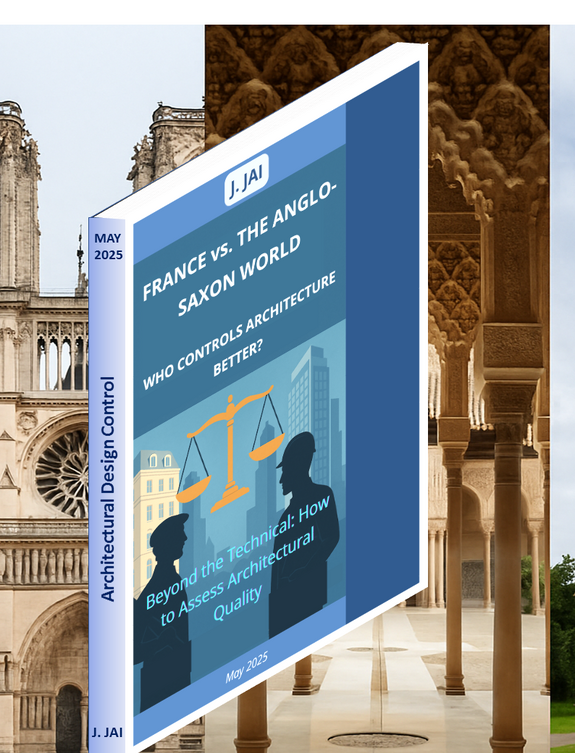
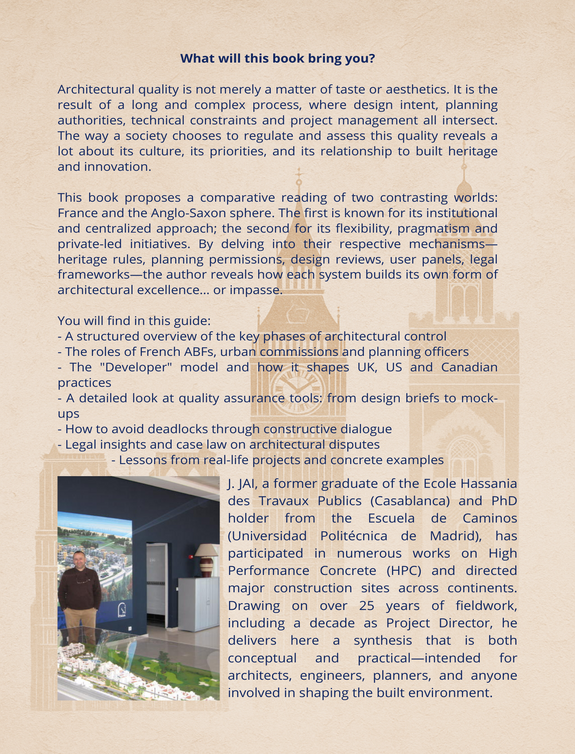
This book’s purpose is to define, illustrate, and structure tools for evaluating design substance, comparing Francophone practices (France, Africa) with Anglo-Saxon approaches.
 guidesbatiment