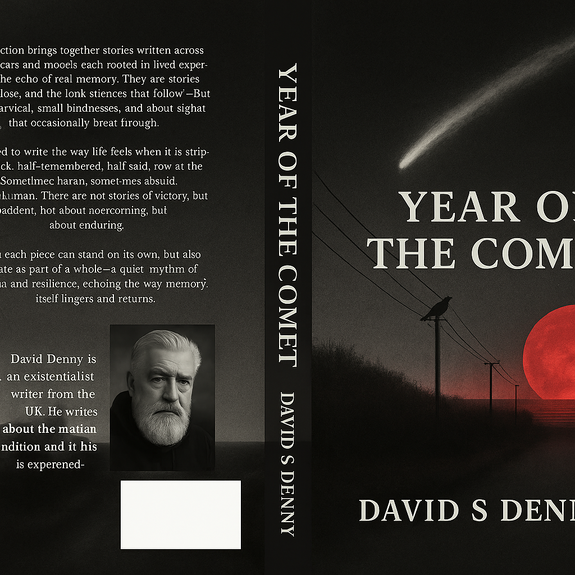
f there is a creed in this book, it is small and workable. Pay attention. Cut what isn’t load-bearing. Say the name. Hold the lid a moment longer if someone asks you to. Believe, when you can, in the usefulness of cadence—the way a sentence can carry more than sense, the way rhythm can smuggle truth past the guard we set at the door of ourselves. Humour is allowed. So is anger. So is the dull day that does nothing but sand us back to the grain. The places are local: East Midlands lanes and humming wires, allotments with rusted chairs, old RAF huts powdered with paint and history, mills holding on to their dark, pubs that know your name even when they shouldn’t. But the weather is general. Loss and consolation are not parish matters. We learn, and learn again, that love is method more than miracle; that compassion is a practice of hands; that we are carried farther than we think we can bear and set down more gently than we deserve.
 DavidDennybookshop